Most money problems start as a surprise. The car needs a repair, the rent goes up, a paycheck is late. An emergency fund is the money that turns those moments from a crisis into an inconvenience. Its whole job is to be there when you need it.
What counts as an emergency
Decide this before you start saving, because it is much harder to decide in the moment. A useful test: is it necessary, urgent and unexpected? All three, and the fund is for it.
- Losing your job or a big drop in income.
- A medical or dental bill you could not plan for.
- An urgent repair to your home or the car you need for work.
- A last-minute trip for a family emergency.
A holiday, a sale or a new phone because the old one is slow are not emergencies. Those belong in their own savings goals, so they never eat into this one.
Step 1: work out one month of essentials
Your target starts with one number: what you must spend in a month to keep life running. Not your full spending, just the essentials.
- Rent or mortgage.
- Utilities, phone and internet.
- Groceries.
- Transport to work.
- Insurance and minimum debt payments.
- Childcare or anything else you cannot pause.
The best source is what you actually spent, not what you think you spend. Look back over the last three months of bank statements and add up these categories, then divide by three. If the total surprises you, our guide to reading a bank statement helps you sort what each line is.
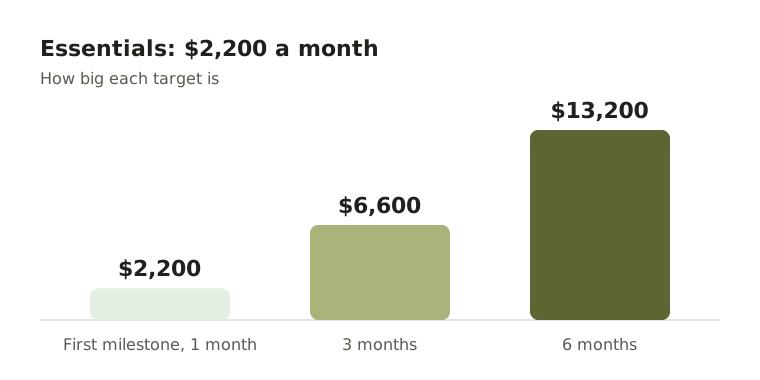
Say the essentials come to $2,200 a month. That is the number everything else is built on.
Step 2: pick a target
A common rule of thumb is three to six months of essential costs. With $2,200 of essentials, that is somewhere between $6,600 and $13,200.
Where you sit in that range depends on how steady your life is:
- Closer to three months if you have a stable salary, a second earner in the household, or few people relying on you.
- Closer to six months, or more, if you are self-employed, your income changes month to month, you are the only earner, or your work is in a field where jobs take time to find.
If that figure feels impossible, set a first milestone instead. One month of essentials, or even $1,000, already covers most small emergencies, and reaching it quickly builds the habit.
Step 3: decide where to keep it
The fund needs to be easy to reach in a day or two, but not so easy that you spend it by accident. For most people that means a separate savings account, away from the account their card spends from.
- Separate so it does not quietly blend into everyday spending.
- Easy access so you can move it when something happens, without penalties or long waits.
- Safe rather than invested. This money's job is to be there in full on a bad day.
Many banks let you open a savings account or a separate pot right next to your main account. Which account and interest rate suit you best is your call; if you are unsure, ask a professional.
Step 4: fill it a little every payday
Pick a fixed amount and move it the day your pay arrives, before you start spending. Setting up a standing order or recurring transfer at your bank makes this happen without a decision each month.
To find the amount, look at what you usually keep. If your savings rate shows you keep $400 in a typical month, moving $250 to the fund is realistic. At $250 a month, a $6,600 target takes a little over two years. That is normal. Slow and steady fills it.
Ways to get there faster:
- Send part of any windfall, like a tax refund or a bonus, straight to the fund.
- Cancel subscriptions you have stopped using and move that amount instead. Our guide to finding forgotten subscriptions shows where to look.
If your income is uneven, save a percentage of each payment rather than a fixed sum. Our guide to budgeting on an irregular income goes through how.
Step 5: use it, then refill it
When a real emergency happens, use the fund without guilt. That is what it is for. Afterwards, go back to your monthly amount until it is full again. Once a year, check that your target still matches your essentials, since rent and bills tend to rise. To see how the fund fits with your other savings, read how much you should have in savings.
How Fimerse helps
Fimerse lets you add a savings goal with a target amount, then add funds to it as you save, so a progress ring shows how close you are.
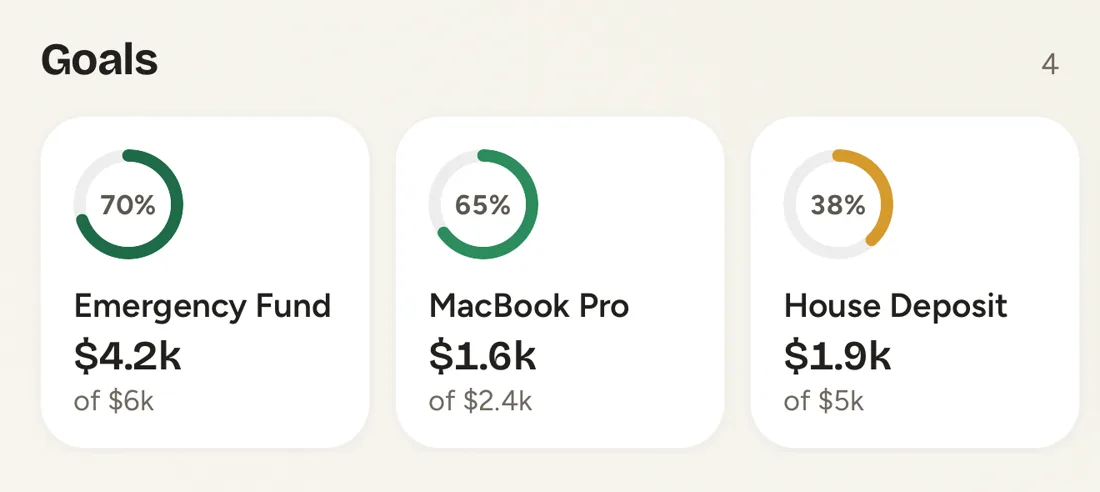
To find your essentials number, the spending breakdown by category can show the last three or twelve months, which smooths out one unusual month. Goals, budgets and accounts you type in by hand are free; reading your bank statements for you is part of Plus.
Questions people ask
Should I invest my emergency fund?
This guide cannot give investment advice. The general idea of an emergency fund is that it stays easy to reach and does not drop in value right when you need it. If you want to weigh other options, ask a financial professional.
Is a credit card an emergency fund?
A credit card can cover a surprise, but you then owe the money, often with interest. A fund of your own means the emergency is over when it is paid, not a month later when the bill arrives.