
Most budgeting advice, including our guide to making a monthly budget, assumes the same paycheck lands on the same day every month. If you freelance, work on commission, run a small business or do seasonal work, that is not your life. One month is great, the next is thin, and a budget built on an average keeps breaking. The fix is to budget from the floor, not the middle.
Step 1: Find your baseline
Your baseline is what a month costs when you only pay for what you must: housing, utilities, groceries, insurance, transport, minimum debt payments and any bills you cannot pause. Go through two or three months of statements and add up just those. This is the number every month has to cover.
Step 2: Look at your real income history
List what actually came in each month for the past six to twelve months. Not what you invoiced: what arrived. Note the lowest month, the highest and the typical range. Many people find their income is less random than it feels, with a seasonal rhythm they can plan around.
Step 3: Budget from your low month
Build your regular monthly budget so that your baseline fits inside a low month, with a little room. Everything above that in a good month is extra, not a raise. This one change stops the cycle of spending a good month and struggling through the next.
Step 4: Build a buffer and pay yourself from it
Open a separate savings account as your buffer. In good months, move the extra into it. In quiet months, top up from it to reach your normal budget. Over time, aim for the buffer to cover a few months of your baseline, so a slow patch is an inconvenience rather than an emergency.
Some people take this one step further and pay themselves a fixed salary from the buffer on the same day each month, so their personal spending feels as steady as an employee's.
Step 5: Set money aside for tax as it arrives
If no employer takes tax from your pay, it is easy to spend money that is not really yours. A common approach is to move a percentage of every payment into a separate account the day it arrives. The right percentage depends on your country, income and situation, so ask an accountant or check your tax authority's guidance to set it.
Step 6: Review In, Out, Kept every month
At the end of each month, write down what came in, what went out and what you kept. Seen side by side over several months, uneven income becomes readable: you can see whether the buffer is growing and whether your baseline is creeping up.
How Fimerse helps
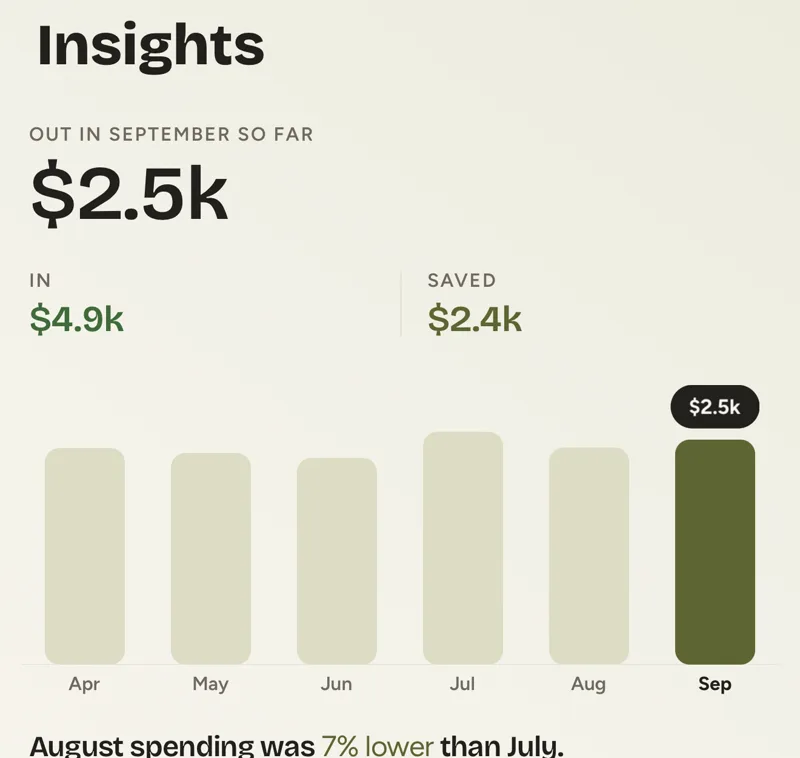
Fimerse shows In, Out, Kept for every month, so a big month and a quiet one sit next to each other. Transfers between your own accounts, such as moving money to your buffer, are recognised and left out of spending. You can set budgets per category, add a savings goal for your buffer and watch it fill, and keep track of bills with their due dates. If you are paid by clients in different currencies, each account keeps its own currency and the totals follow the one you choose. More on that is on the page Fimerse for freelancers.
Questions people ask
How big should my buffer be?
Many people aim for three to six months of their baseline costs, but the right size depends on how uneven your income is and how secure your work feels. Start with one month and build from there.
Should I use my average income to budget?
Averages hide the low months, which are the ones that cause trouble. Budgeting from a low month and saving the surplus is safer and less stressful.