Card payments track themselves: each one appears on your statement with a name and an amount. Cash does not. A $200 withdrawal is one line on your statement, and what it paid for disappears. If you use cash often, a big part of your spending can be invisible, which is exactly the part most likely to drift.
Step 1: Give cash its own wallet
In whatever you use to track money, create an account called Cash. If you hold more than one currency in cash, create one wallet for each.
Step 2: Count a withdrawal as a transfer, not spending
When you take $200 out of an ATM, the money has not been spent yet. It has moved from your bank account into your cash wallet. Record it as a transfer between the two, not as spending. Any ATM fee is spending, though, so note it separately.
Step 3: Note payments as you go
The easiest habit is to note a cash payment the moment you make it, while you still have the change in your hand: amount, what it was for, and the category. If that is too much, do it once at the end of the day from memory and receipts. Small amounts can be grouped, for example all the day's coffee in one line.
Step 4: Balance the wallet each week
Once a week, count the cash you actually have and compare it with what your wallet says. The difference is spending you did not note down. Add it as one line called something like Unrecorded cash, so your totals stay true. If that line is large every week, try noting payments as you make them rather than at the end of the day.
Step 5: Look at cash in your monthly review
At the end of the month, look at your cash spending by category next to your card spending. People are often surprised by one category, usually food on the go or small daily treats. Seeing it is usually enough to decide whether it matters to you.
How Fimerse makes this quick
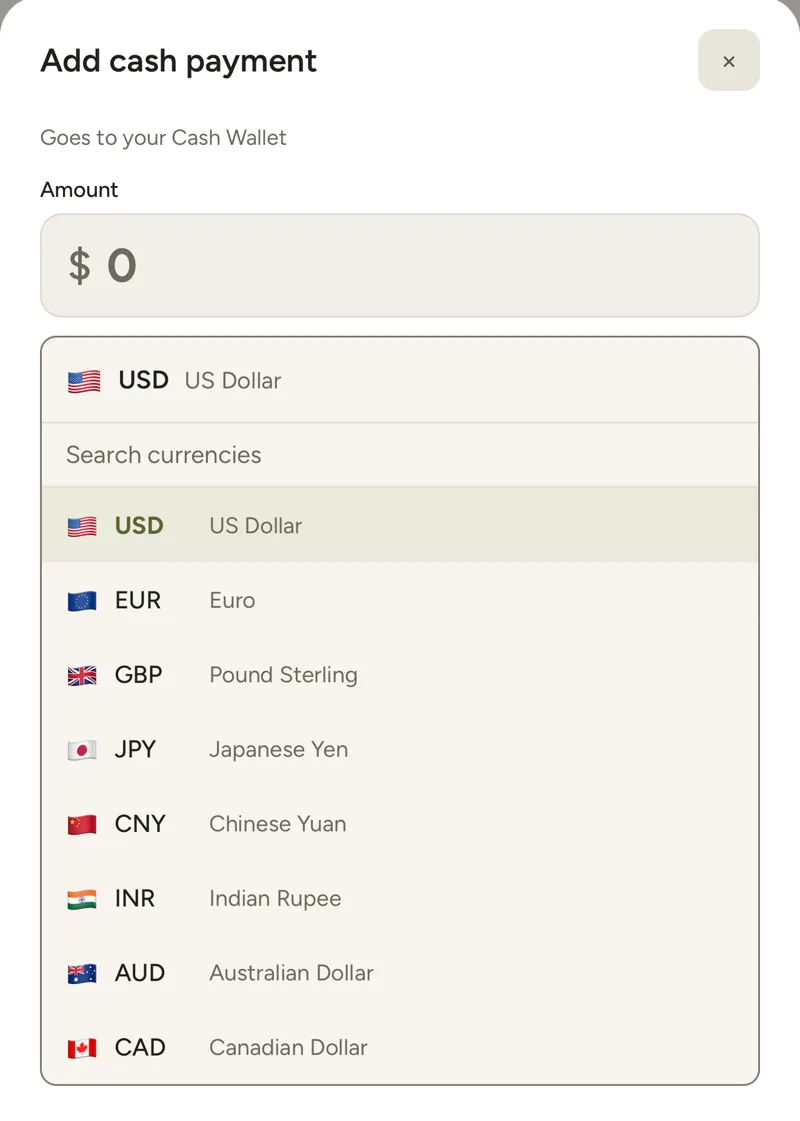
Fimerse always creates a Cash Wallet for you, and you can add more in other currencies. Typing a cash payment takes a few seconds, and you can also say it out loud, for example "twelve dollars lunch", and Fimerse fills in the amount, currency and category for you to check. Adding cash payments by hand is free on every plan, and they count in the same totals as everything else.
Questions people ask
Should I just stop using cash?
If cash makes it hard to see your spending and you can pay by card, switching can help. But in many places cash is the practical choice, and with a simple routine it is as easy to track as a card.
What about cash I receive?
Record it as money in to your cash wallet, with where it came from. It then counts as income in your monthly totals like any other payment you receive.